Grazyna Piesiewicz leads the EU's HPC strategy, which encompasses supercomputing, infrastructure, AI Factories, and the Destination Earth initiative. The discussion focuses on the EU's compute infrastructure and AI Factories, as well as the opportunities and challenges of AI use and development in Europe.
FEATURED

The Serbian Artificial Intelligence Factory Antenna is excited to launch SAIFA Talks, a new webinar series that explores emerging technologies, innovative applications, and the latest advances in artificial intelligence.
The inaugural webinar will explore how the evolution of 6G networks, artificial intelligence, and edge-cloud computing is transforming robotics by enabling intelligent machines to operate in interconnected computing environments. It will be presented by Prof. Dr. Dejan Vukobratović from the Faculty of Technical Sciences at the University of Novi Sad and the Institute for Artificial Intelligence Research and Development of Serbia on 23 Oct 2026 at 15:00 CEST.

A User Forum webinar exploring the growing network of EuroHPC AI Factories, future AI Gigafactories, and associated AIF Antennas across Europe, as well as an overview of the available access tracks for SMEs and academia, will be organized by the Coordination Group of the EuroHPC User Forum and the EuroHPC Joint Undertaking on 4 November 2026.
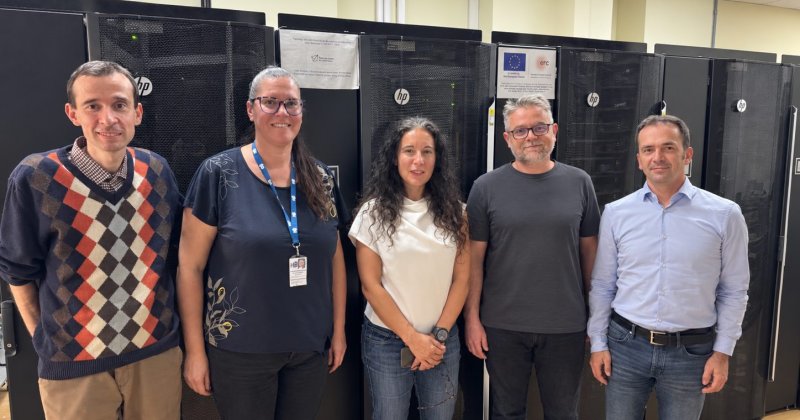
Physicists from CERN, Predrag Milenović and Sofia Vallecorsa, Coordinator of the CERN Quantum Technology Initiative and Head of the Computing and Data Science Section at CERN, visited HPC Serbia at the Institute of Physics Belgrade (IPB) to discuss opportunities for collaboration in high-per...

The first tranche of FFplus Business Experiments has been successfully completed, showcasing the achievements of 18 innovative European SMEs and start-ups that have leveraged high-performance computing (HPC) as newcomers to address real-world business challenges and unlock new growth opportuniti...
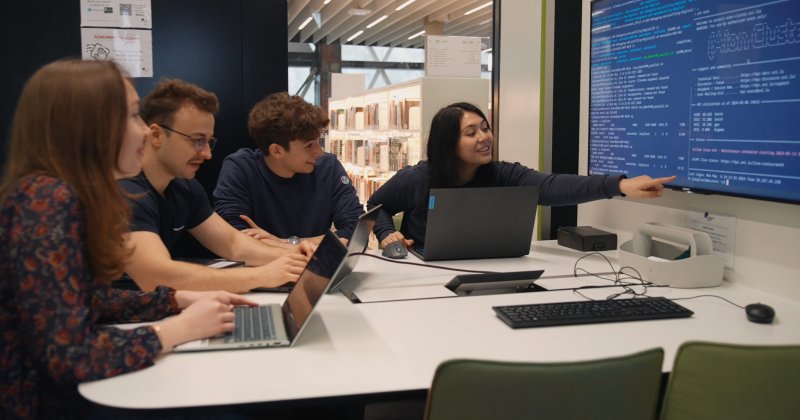
The European Master for High-Performance Computing (EUMaster4HPC) will expand its program with an additional focus on artificial intelligence and quantum computing, starting in September 2026. The Institute of Physics Belgrade, the coordinator of HPC Serbia, is joining the EUMaster4HPC consortiu...
SUPERCOMPUTING IN EUROPE PODCAST




An online session on the basics of quantum error correction will be organized by the Competence Center for HPC, HPDA, AI, and Quantum Computing, France (CC-FR), in partnership with the Teratec initiative TQCI, on 3 November 2026.
The event is part of the Quantum in Practice series, a continu...

The High-Performance Computing Center Stuttgart (HLRS), in cooperation with AMD and the Max Planck Computing and Data Facility, will organize an online training course, Introduction to OpenMP Offloading with AMD GPUs on HLRS's Hunter and Herder systems. The course will be held on 27–28 Octobe...

The Serbian Artificial Intelligence Factory Antenna is excited to launch SAIFA Talks, a new webinar series that explores emerging technologies, innovative applications, and the latest advances in artificial intelligence.
The series aims to bring together researchers, industry professionals, tech...


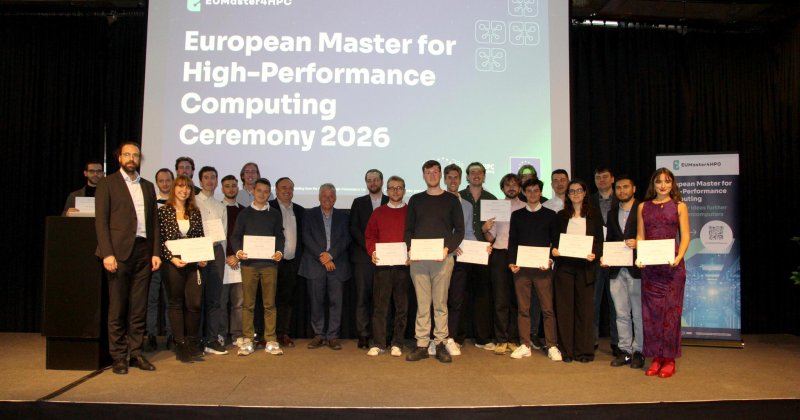
Today, 38 students from the third cohort of the EUMaster4HPC, the Master in High-Performance Computing sponsored by EuroHPC JU were delivered their certificates during a ceremony at the Belval Campus of the University of Luxembourg.
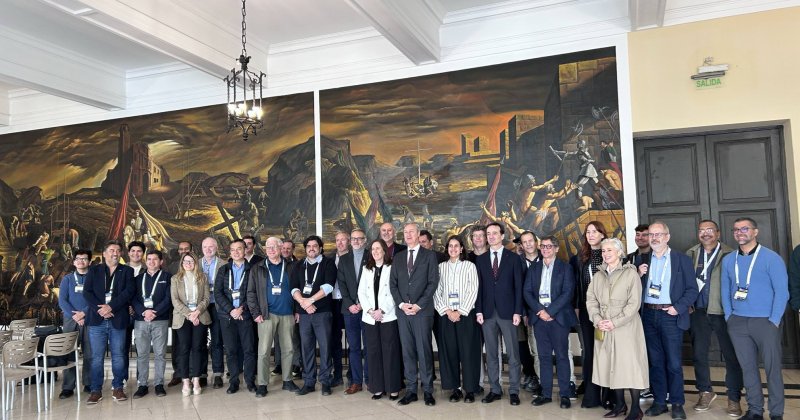
The European High-Performance Computing Joint Undertaking (EuroHPC JU) launches the EU-LAC Supercomputing Network for AI, as part of the EU’s Global Gateway strategy.
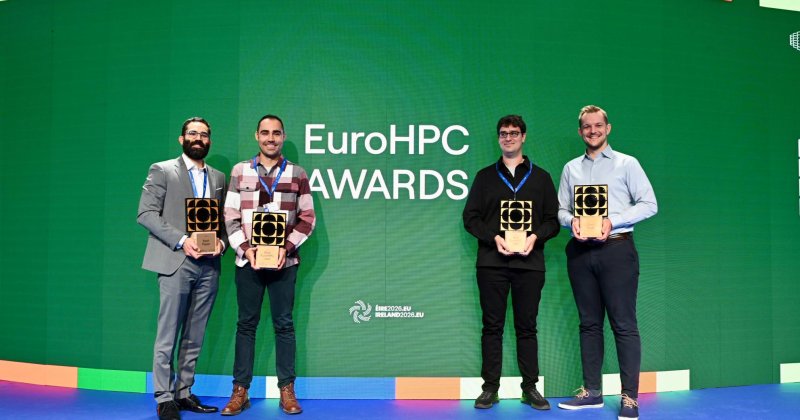
As part of the EuroHPC User Days 2026 held in Dublin this week, four EuroHPC users received awards for their outstanding contributions to the European supercomputing ecosystem. Two awards were granted for Best EuroHPC Users and two for Best Papers.
EUROCC SUCCESS STORIES



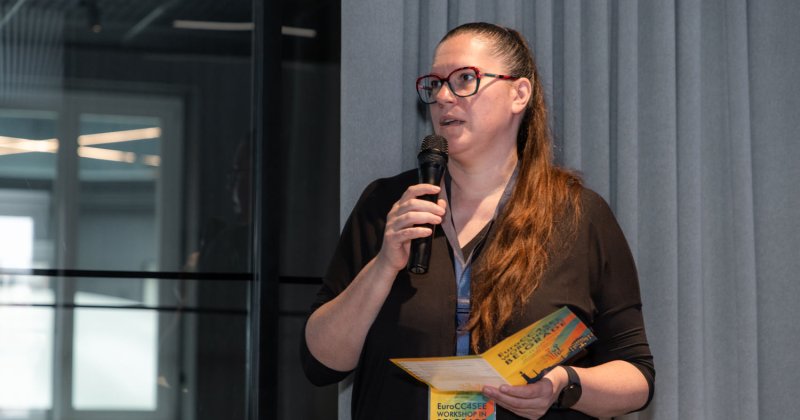
A key activity of the Serbian National Competence Centre (NCC) for High-Performance Computing (HPC), HPC Serbia, is fostering collaboration between academia and industry through HPC. Dr. Marija Mitrović Dankulov from the Institute of Physics Belgrade highlights that one of the NCC's main aims is t...
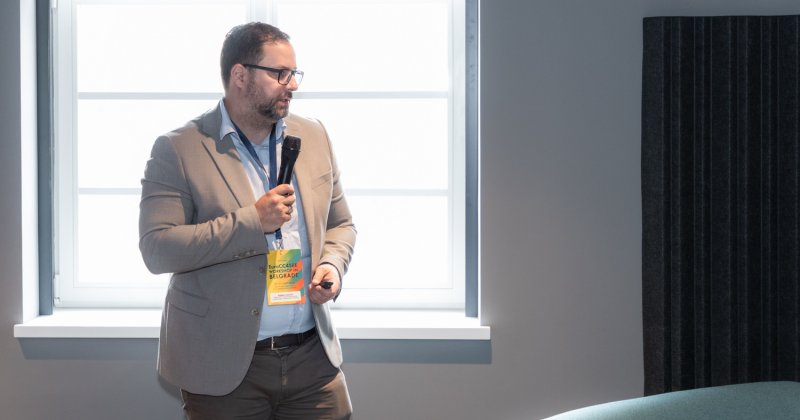
As part of our mission to strengthen the adoption of high-performance computing, high-performance data analysis, and artificial intelligence across society, HPC Serbia has established several collaborations with public sector institutions in Serbia. These partnerships aim to support the development...

The startup Moveo, founded by Vladimir Jeftović, is developing simultaneously in two directions: in the field of healthcare, as well as advanced AI analytics and optimization tools. In the medical field, the company based in Serbia, develops tools for the prevention of neurological complications c...
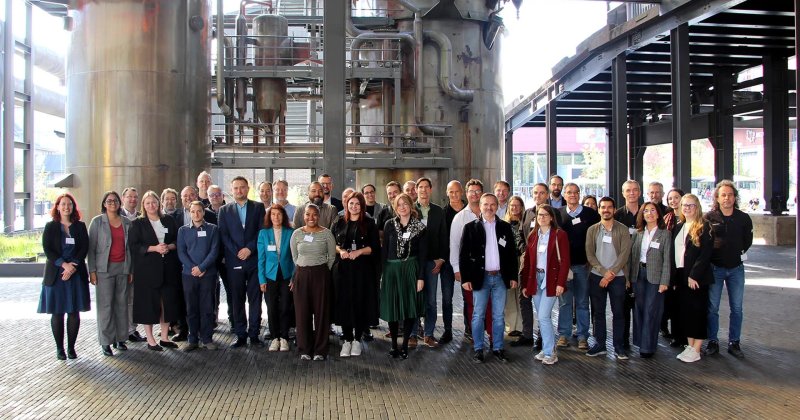
EUMaster4HPC Phase 2 kicked-off with an ambitious goal: train 400 students across four cohorts and expand HPC education with new AI and Quantum Computing specialisations, strengthening Europe's talent pipeline and advancing scientific excellence, innovation and digital autonomy.
On 7 October, ove...
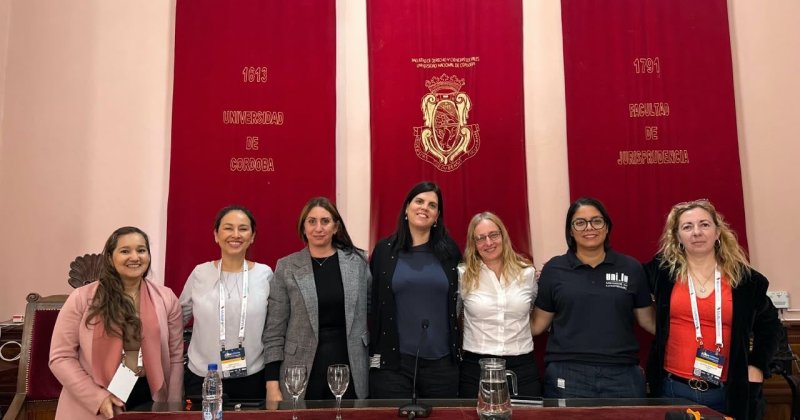
Last week, at the Latin America High Performance Computing Conference - CARLA 2026 Conference in Argentina, Katerine Saleme Ruiz, Project Manager of the EUMaster4HPC programme, joined the panel "LAC-WHPC @ CARLA", a conversation bringing together inspiring women working at the intersection of Hi...
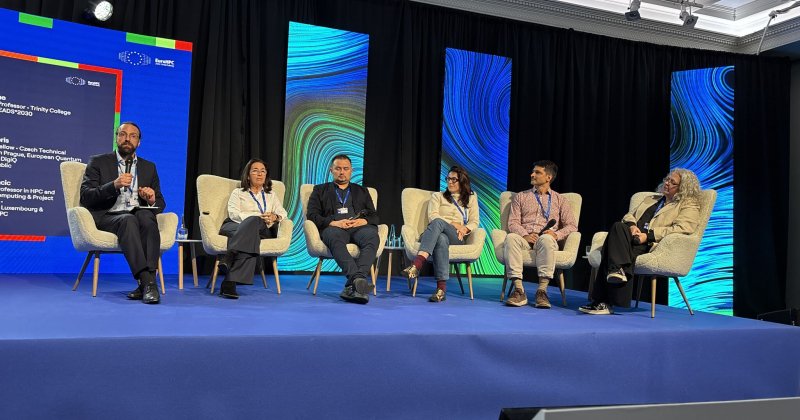
Prof. Marko Rancic, Project Coordinator of EUMaster4HPC, joined the "PARALLEL SESSION: Europe's Gateway to Supercomputing Training" panel at the EuroHPC Joint Undertaking (EuroHPC JU) User Days in Dublin.
During the session, Prof. Marko Rancic presented the EUMaster4HPC programme and its con...
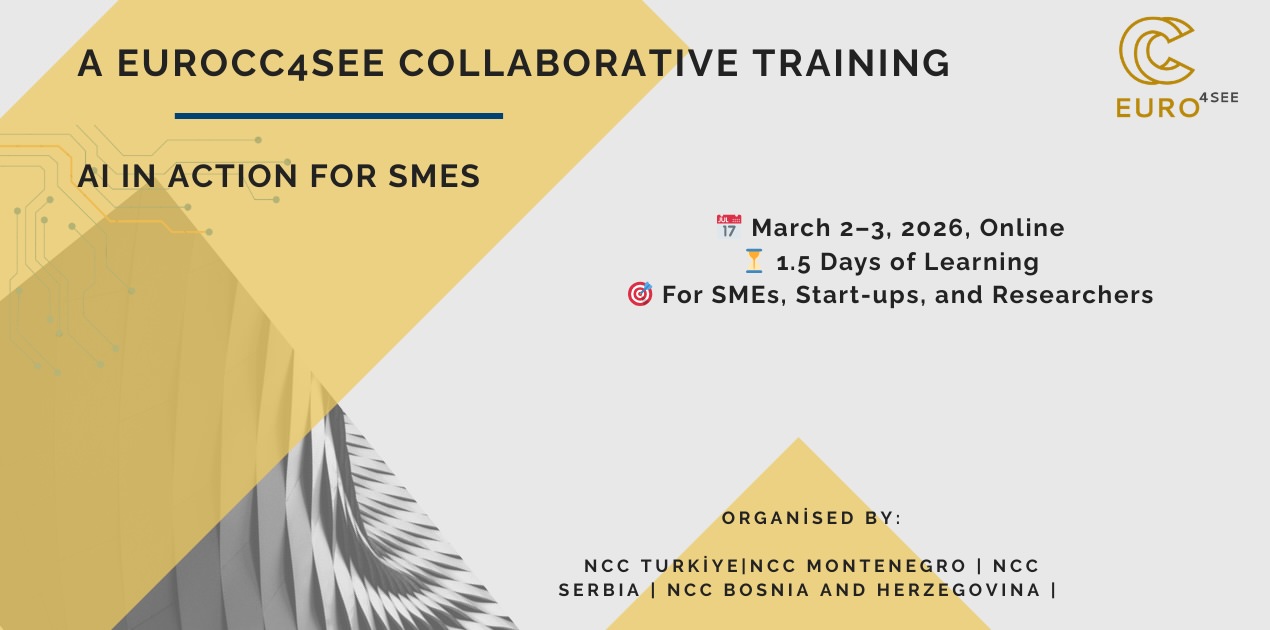
In collaboration with NCC Montenegro, NCC Bosnia and Herzegovina, and NCC Türkiye, HPC Serbia organized the 1.5-day online training event AI in Action for SMEs on 2–3 March 2026 as part of the EuroCC4SEE initiative.
The event brought together regional expertise to support SMEs, start-ups, and researchers in adopting practical Artificial Intelligence solutions. Participants explored real-world AI applications, including Time Series Forecasting, Explainable AI, and Data Anonymization, through a combination of theoretical sessions and hands-on HPC demonstrations.
FFPLUS SUCCESS STORIES



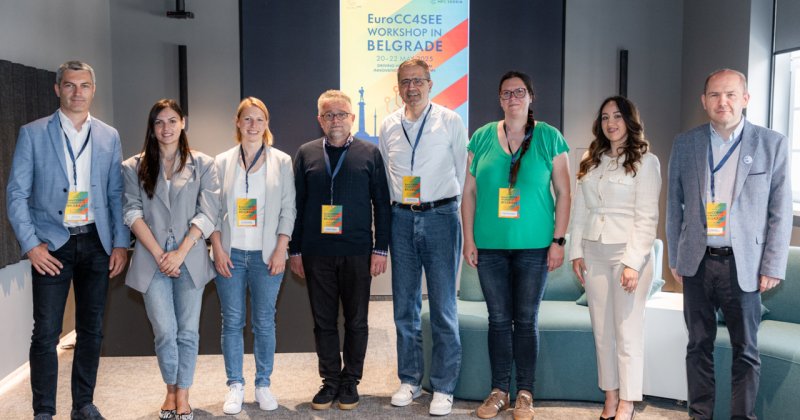
For more than fifteen years, research institutions and scientific communities across Southeast Europe have been building strong regional cooperation in advanced digital infrastructure. According to Dr. Dušan Vudragović from Serbian National Competence Center in High-performance computing (NCC Serbia...

The HPC4SME Assessment Tool is a free, web-based platform that helps Small and Medium-sized Enterprises (SMEs) determine whether and how they can benefit from High-Performance Computing (HPC). Developed by the Slovenian company Arctur in collaboration with multiple European National Competence C...

Regional cooperation is a key driver for advancing high-performance computing (HPC) and artificial intelligence across Southeast Europe. By connecting national competence centers, research institutions, and industry partners within the broader European HPC frameworks, these efforts extend beyond nat...
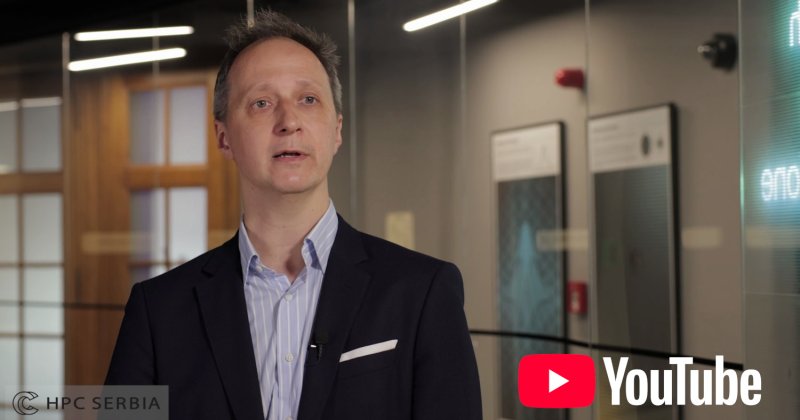
In our recent conversation, Professor Miloš Cvetanović from the School of Electrical Engineering at the University of Belgrade discusses how high-performance computing technologies are being adopted in Southeast Europe and why regional cooperation is essential for their further development.
Acco...

The startup Moveo, founded by Vladimir Jeftović, is developing simultaneously in two directions: in the field of healthcare, as well as advanced AI analytics and optimization tools. In the medical field, the company based in Serbia, develops tools for the prevention of neurological complications c...

HPC Serbia plays a central role in fostering regional cooperation throughout Southeast Europe by linking national competence centers, research institutions, and industry partners within the wider EuroCC and EuroHPC frameworks. Initiatives like EuroCC4SEE allow HPC Serbia to enhance cross-border co...